
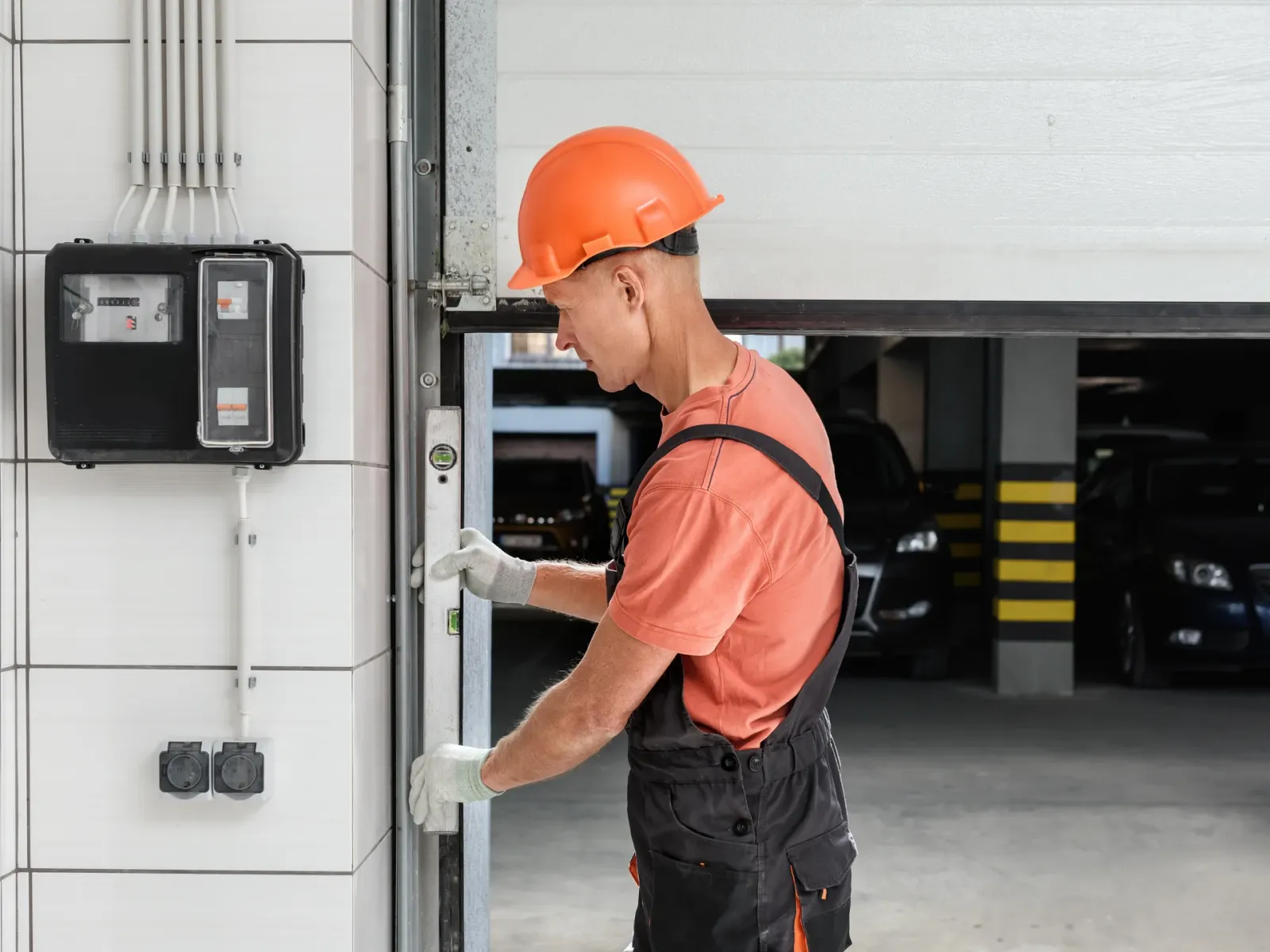
Summer heat doesn’t “break” a garage door by itself—but it can make small problems louder and more noticeable. Expansion, humidity, and frequent use (kids home, more trips in and out) all add up. A quick summer tune-up is a smart way to prevent a stuck door at the worst time.
Quick takeaways
- If the door is suddenly louder or starts rubbing in summer, it may be a track/roller alignment issue.
- Don’t “power through” a heavy or binding door with the opener—get it inspected.
- A little cleaning and the right lubrication can make a big difference.

Step 1: Clean the basics (it’s more important than it sounds)
Summer brings dust and pollen. Start with:
- Wipe photo-eye sensors (lens clarity matters)
- Clear debris near tracks and the floor seal
- Check the bottom seal for tears or gaps
If the door won’t close consistently, start with this guide: Opener Troubleshooting (Quick Fixes)
Step 2: Listen for “new” noises
Run one full cycle and listen for:
- Grinding or scraping
- Loud popping
- Rattling that wasn’t there before
Noise is often your first clue that rollers, hinges, or track alignment need attention. Related: Noisy Garage Door Fixes
Step 3: Check the door travel and alignment
Look for:
- A door that leans slightly as it moves
- Rub marks on track or door edges
- A bottom seal that touches unevenly
If the door binds or looks uneven, schedule service instead of forcing it:
Step 4: Balance matters (especially with frequent summer use)
If the opener seems to struggle more than usual, do a balance check:
- Disconnect the opener with the emergency release.
- Lift the door manually a short distance.
If it feels heavy or unstable, the spring system likely needs service. Start here:
Step 5: Lubricate the right spots (and avoid the wrong ones)
Generally, lubrication is most helpful on:
- Hinges
- Roller bearings
- Bearings at the torsion shaft ends (if present)
Avoid greasing the tracks themselves. Tracks should be clean, not slick.
Step 6: Safety checks (don’t skip these)
- Test photo-eyes for proper reversal behavior
- Test auto-reverse (door should reverse on contact with an object)
If you want a full checklist: All About Garage Door Safety Inspections
Summer-specific issues in Tennessee (what we see most)
Hot weather and humidity can make small alignment problems feel bigger:
- Expansion can change how tight clearances feel around tracks and seals.
- Humidity can increase drag and can amplify noise on worn rollers and hinges.
- More cycles (kids home, more trips) can expose parts that were already close to worn out.
If the door starts rubbing, reversing, or shaking in the tracks, treat it as a mechanical issue—not “just the heat.”
Quick summer tune-up checklist (printable)
Use this as a simple once-a-season check:
- Clean and align photo-eyes
- Clear debris near tracks and seals
- Listen for new noises (grinding/scraping/popping)
- Check for visible cable fraying (visual only)
- Confirm the door seals evenly along the floor
- Test auto-reverse and sensor reversal
If any item fails—or if the door feels heavy—schedule service instead of forcing it.
When to schedule a professional tune-up
Consider service if:
- The door has become noticeably louder
- The opener strains or behaves inconsistently
- The door binds, rubs, or closes unevenly
- You’ve never had the door professionally checked since moving in
Start here: Garage Door Repair or Contact
When to call a pro
If you notice frayed cables, an off-track door, or a heavy door that won’t lift smoothly, stop and schedule service:
FAQs
Should I lubricate more in the summer?
More isn’t always better. The right lubrication in the right places helps; over-spraying can attract grit. If you’re unsure what’s appropriate for your setup, ask during a service visit.
Why does my door reverse more in the summer?
Reversals are commonly caused by sensors, binding, or balance issues. Summer conditions can make an existing alignment problem show up more often, but the root cause is still mechanical.