
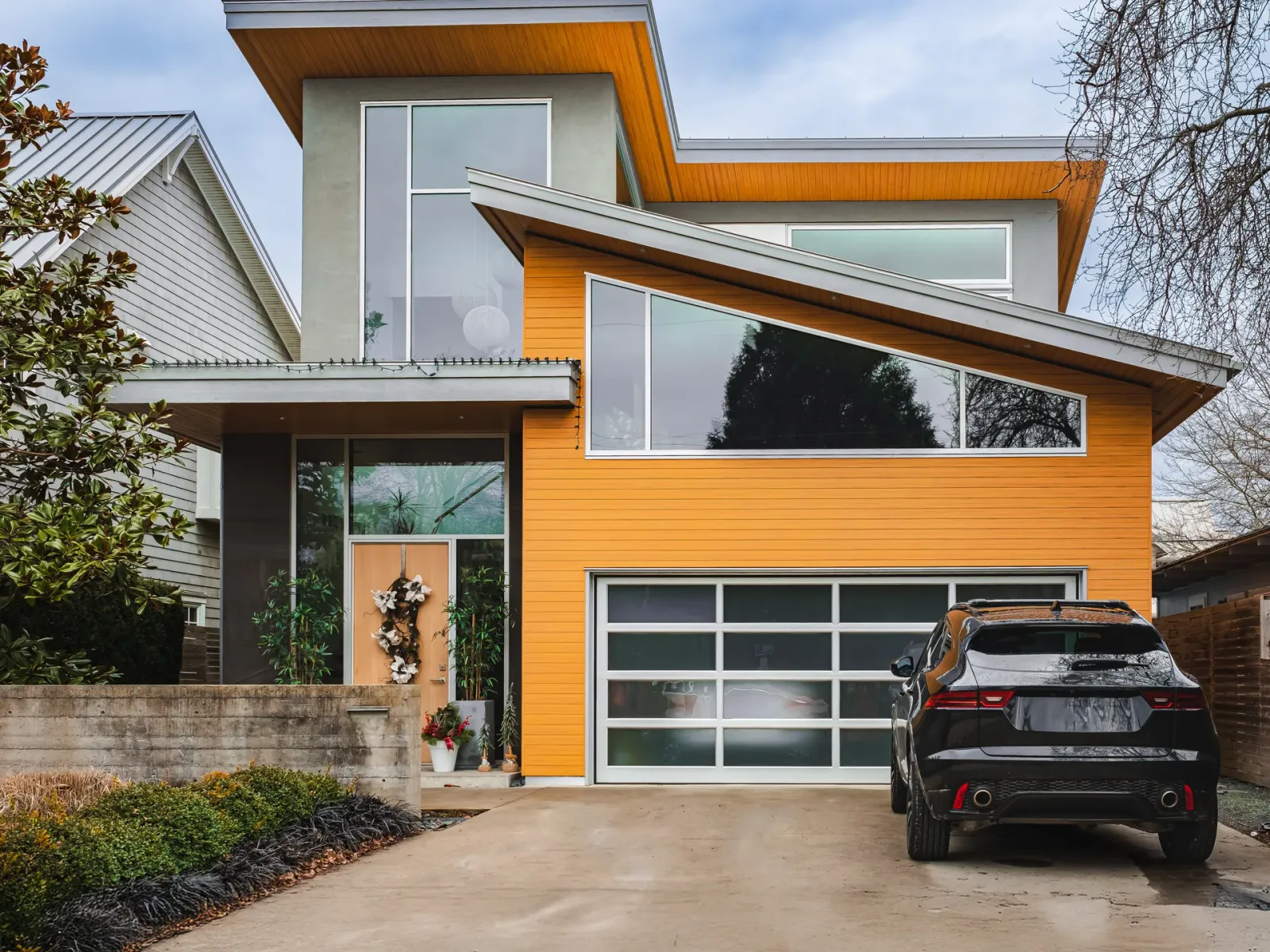
Your garage door is a major part of the front of your home. The right style can make the exterior feel intentional and “finished,” while the wrong style can look like an afterthought—even if the door itself is new.
This guide walks through the most common styles and the design details that actually matter.
Quick takeaways
- Choose a style that matches your home’s architecture first (traditional, carriage-house, or modern).
- Windows and decorative “hardware looks” can change the entire feel of a door without making it high-maintenance.
- Great design still needs a great install: smooth travel, proper balance, and clean sealing.
The three most common garage door style families
Traditional panel doors
Traditional doors are clean and versatile. They work well on many homes because the lines are familiar and the door doesn’t compete with other exterior elements.
Traditional is a strong choice if you want:
- Simple design with broad curb appeal
- Easy upkeep
- A style that won’t feel “dated” quickly
Carriage-house style
Carriage-house designs add character through overlays, window layouts, and decorative hardware looks. They often fit:
- Farmhouse and craftsman-inspired homes
- Traditional homes that need more visual detail
- Homeowners who want a “custom” feel without going fully custom
Modern aluminum-frame and glass
Modern doors focus on clean lines and light. Aluminum-frame doors with glass panels can make a home feel significantly more modern—especially paired with modern lighting and a simple landscape.
Modern is a strong fit if you want:
- A minimalist, architectural look
- More natural light in the garage
- A door that becomes a design feature (not just a utility panel)
You can browse examples here: Products
Windows: style, light, and privacy
Windows can:
- Add a “finished” look to a plain facade
- Make the garage feel less like a cave
- Create balance with the home’s front windows
If privacy matters, ask about:
- Frosted/obscure glass options (when available)
- Top-row window placement (a common compromise)
Decorative hardware: the low-effort curb appeal boost
Decorative hinges and handles can visually “sell” a carriage style without changing how the door works. The best approach is to pick hardware that matches:
- Your home’s exterior colors
- Any existing metal accents (lighting, railings)
- Your style direction (traditional vs. modern)
Color and finish: match the house, not the trend
A safe, high-impact approach:
- Match the door to the main body color (for a cohesive look), or
- Match it to the trim color (for a framed, classic look)
If you’re unsure, take a photo from the curb and compare options—garage doors read differently from the street than they do close-up.
Design choices that affect day-to-day experience
Style matters, but so does how the door feels:
- Insulation can make the door feel more rigid and quieter.
- Hardware quality and balance affect smoothness and noise.
- Opener selection affects convenience and sound.
Start here if you’re planning a full upgrade:
FAQs
What style is “best” for resale?
The best style is the one that looks like it belongs on the house. Clean, well-proportioned designs with good window placement usually win over trendy choices that clash with the architecture.
Will a modern glass door make my garage hot?
It depends on the home’s exposure and your garage setup. Glass changes how light enters the space. If comfort is a priority, discuss insulation/sealing and the best design for your layout before buying.
Should I replace the opener when I replace the door?
Not always—but if the opener is already struggling or noisy, it’s a good time to evaluate. Many opener problems are actually balance problems, so a quick inspection helps.
Next step
If you want help choosing a style and mapping it to the right construction and hardware, send a couple photos and your city. Start here: Contact.