Curb appeal is about making the front of your home feel cohesive and intentional from the street. Because the garage door is often the largest visual element, the right choice can lift the whole facade.
Quick takeaways
- Match the door to the home’s architecture first (traditional, carriage-house, or modern).
- Proportion and panel layout matter as much as the color you pick.
- Window placement and finish should echo the home’s trim and exterior metals.
If you want a full performance-focused guide (insulation, hardware, quote prep), read: How to Choose a New Garage Door in Tennessee.
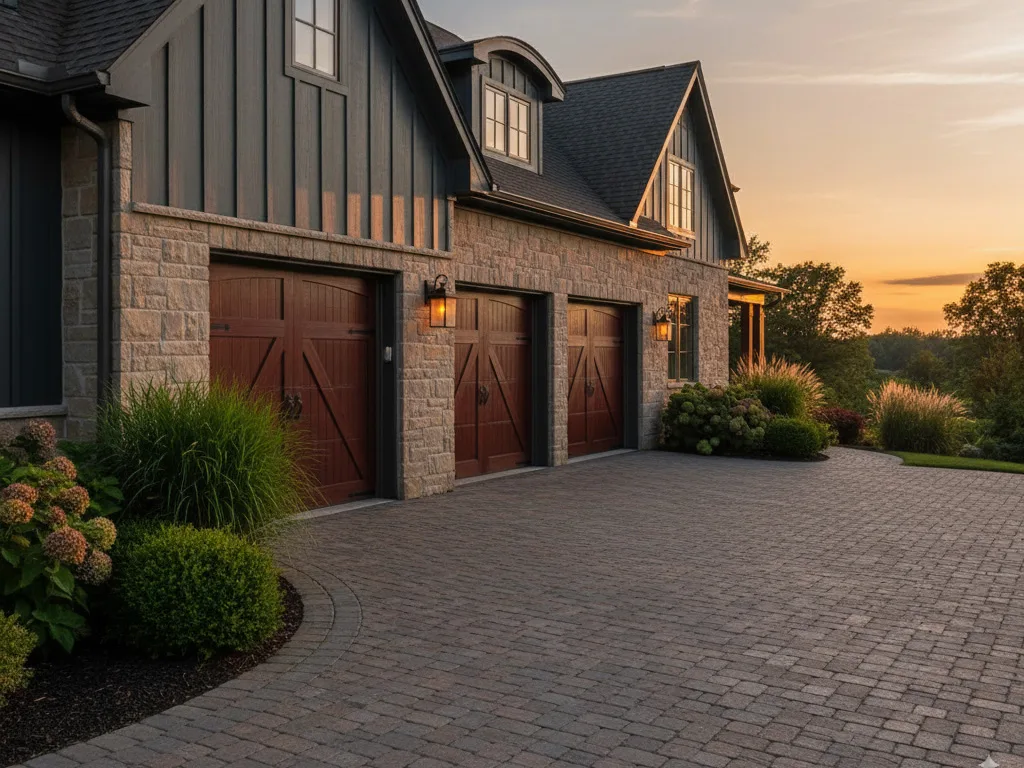
Step 1: Stand at the curb (not the driveway)
Most decisions happen too close to the door. Step back to the street and look for:
- The home’s dominant style cues (brick? modern lines? farmhouse textures?)
- Whether the garage dominates the facade
- Where the “visual weight” is (garage side vs. front entry side)
If the garage is visually dominant, your door choice matters even more.
Step 2: Pick a style that fits the architecture
Traditional
Simple, clean, and usually the safest choice. Works with most exteriors without competing with other details.
Carriage-house
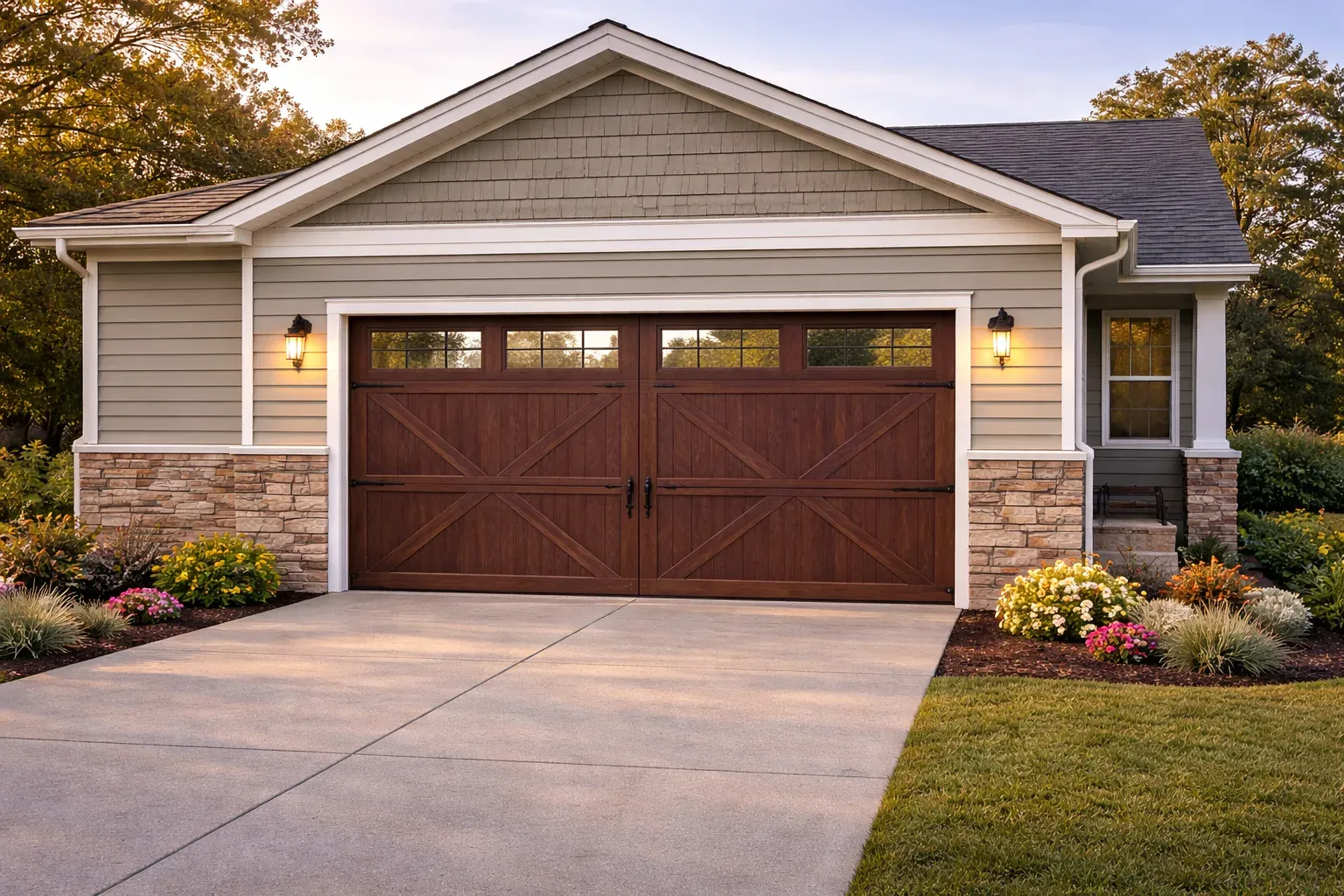
Adds warmth and character, especially for traditional and farmhouse-inspired homes. Decorative hardware and window layouts create the custom feel.
Modern aluminum-frame and glass
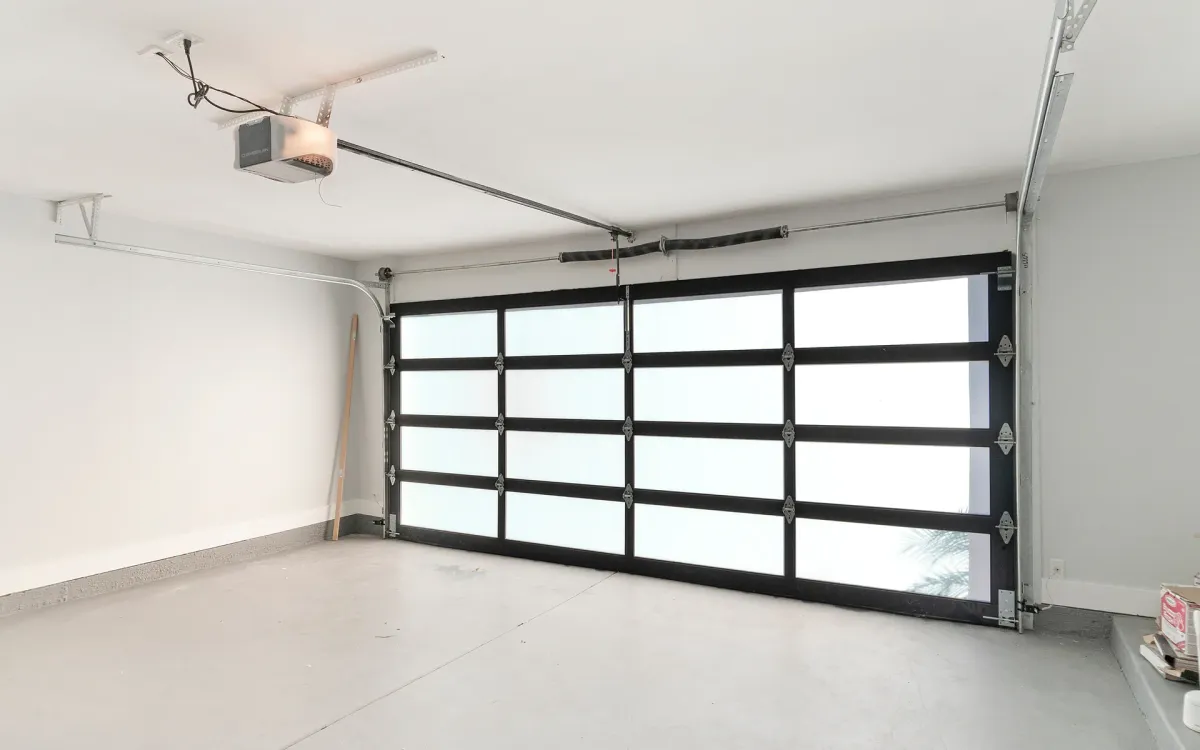
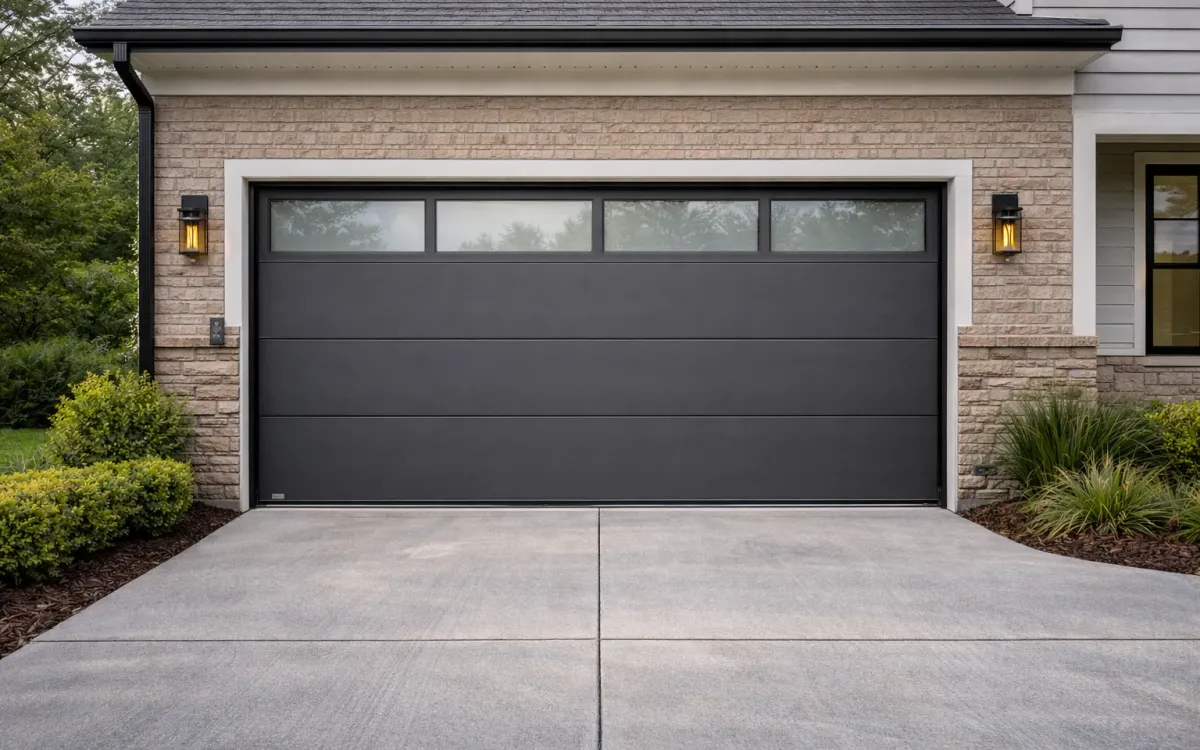
A strong fit for modern homes or facades with clean lines and minimal trim. Glass can bring in light—just plan for privacy.
For a deeper breakdown, see: Garage Door Styles and Design
Step 3: Get the proportions right (panel layout and size)
The door should feel balanced against the rest of the facade. Watch for:
- Single vs. double door: Two singles can break up a wide garage wall better than one large door.
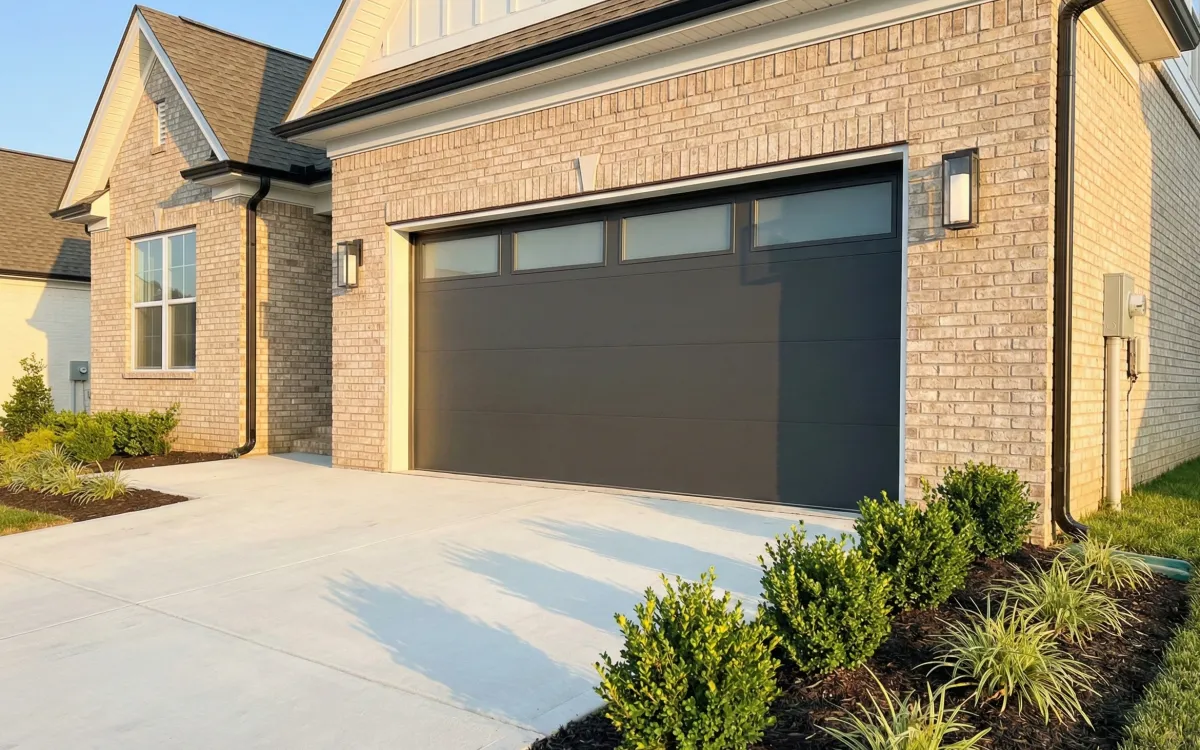
- Panel proportion: Taller panels can make a low garage look shorter; more horizontal lines can make it feel wider.
- Alignment: If possible, align top-row windows with nearby house windows.
Step 4: Windows are the curb-appeal multiplier
Windows change a door’s look more than most other features. Great window choices:
- Maintain symmetry (or a purposeful asymmetry that matches the facade)
- Align visually with house windows when possible
- Use top-row windows as a classic “safe” upgrade
If privacy matters, ask about glass options and placement before committing.
Step 5: Choose color and finish with the home, not against it
Two reliable approaches:
- Match the body color for a clean, integrated look (door “disappears,” entry stands out).
- Match the trim for a framed, traditional look.
If your goal is “premium,” avoid colors that fight the roof tone or brick/stone colors.
Step 6: Details that make it feel intentional
Small details can make a standard door feel custom:
- Hardware that matches other exterior metals (lights, railings, fixtures)
- Consistent trim thickness around the opening
- Exterior lighting that balances the garage with the front entry
Step 7: Performance still affects perception
A door that rattles or binds can make the whole home feel less maintained. If the door is noisy or heavy, fix that first, then invest in the curb appeal upgrade.
Related:
Quick curb-appeal checklist (before you buy)
- Style matches the house (traditional/carriage/modern)
- Panel layout and proportions look balanced from the street
- Windows look proportional and align with the facade
- Color matches body or trim (not “random contrast”)
- Hardware and exterior lighting feel consistent
FAQs
What if I can’t decide between two styles?
Pick the one that looks like it “belongs” when you zoom out to the whole facade. If one option looks like a showroom upgrade and the other looks like it was always meant to be there, choose the second.
Do decorative handles and hinges matter?
They can—especially on carriage styles. The key is picking hardware that matches the home’s other metal finishes (lights, railings, fixtures) so it feels consistent.
Next step
If you want help choosing a door that fits your home in the Cleveland/Chattanooga area, browse Products and then send a photo of the front elevation and your city when you Request Service.