Choosing a new garage door is one of the highest-visibility upgrades you can make. The best pick isn’t just about looks—it’s about comfort, durability, noise, and how well the door fits your home and daily routine.
Quick takeaways (the “short list”)
- Most homeowners want a door that’s quiet, durable, and low-maintenance—insulated steel is often the best all-around fit.
- If curb appeal is your main goal, start with Choosing a Garage Door for Curb Appeal.
- The “hidden” quality is in the hardware and balance. A great door installed with poor setup will still feel rough and loud.
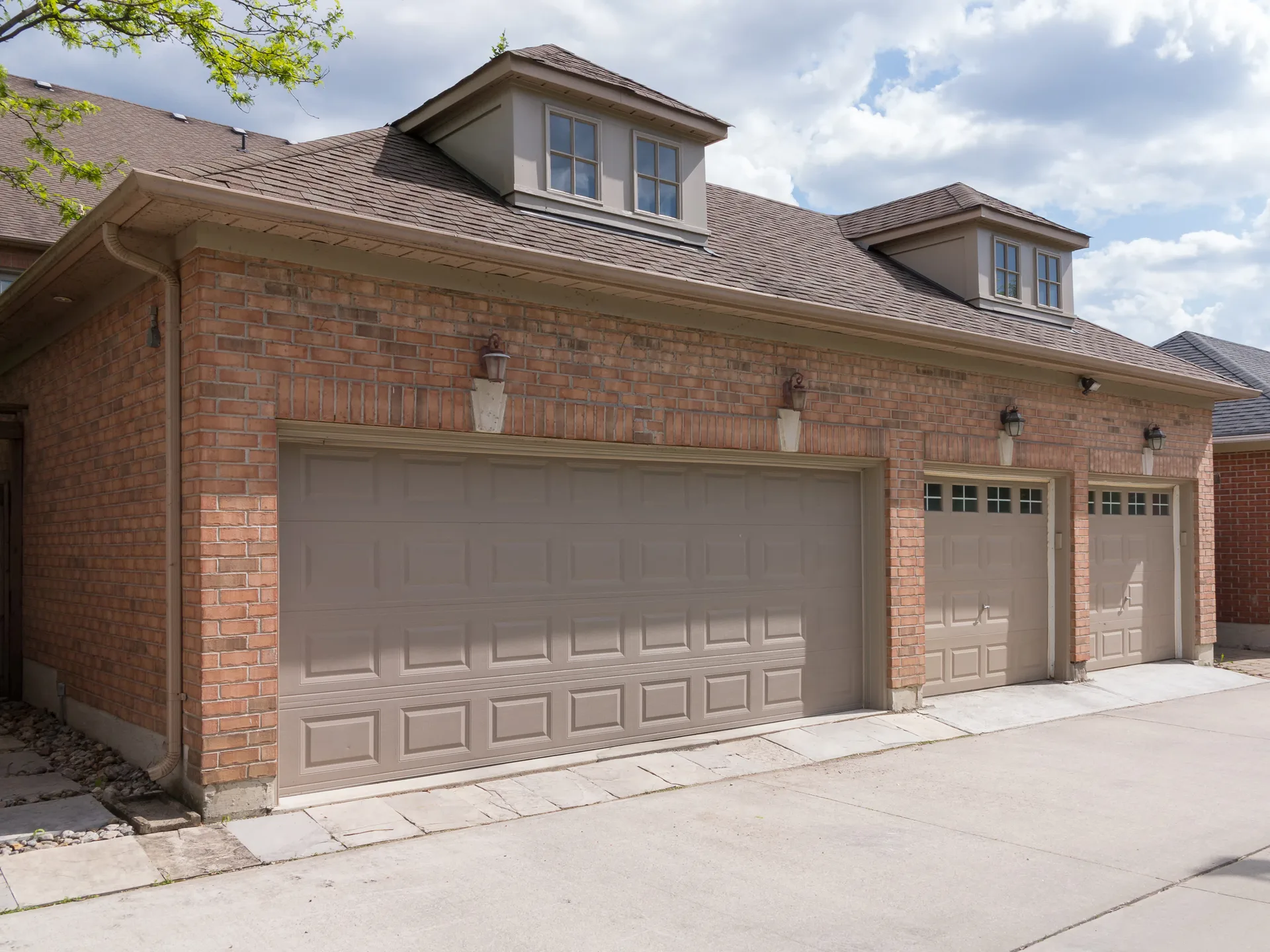
Step 1: Start with how you use the garage
Ask yourself:
- Is the garage attached (sharing walls with living space)?
- Do you use the garage as a workshop, gym, or storage area?
- Does noise matter (bedroom above, office nearby)?
- Do you want natural light (windows / glass panels)?
Your answers determine how much insulation, sealing, and “quiet hardware” matter.
Step 2: Pick a style that fits your home
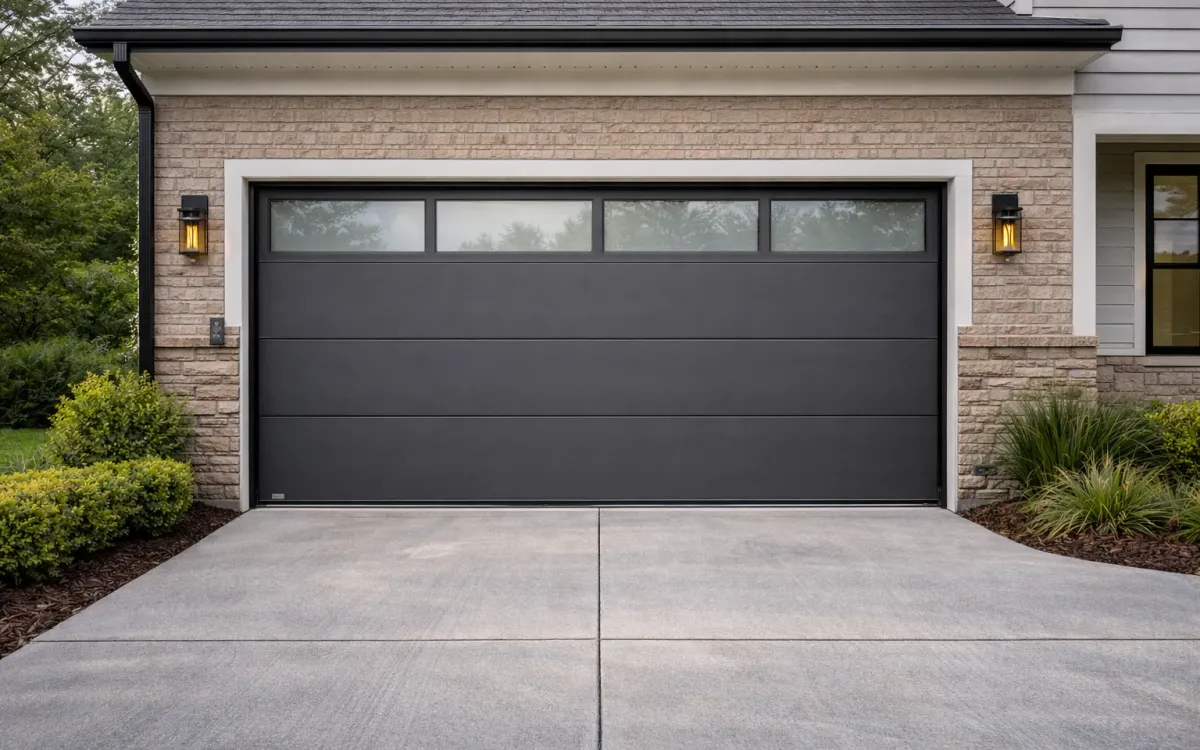
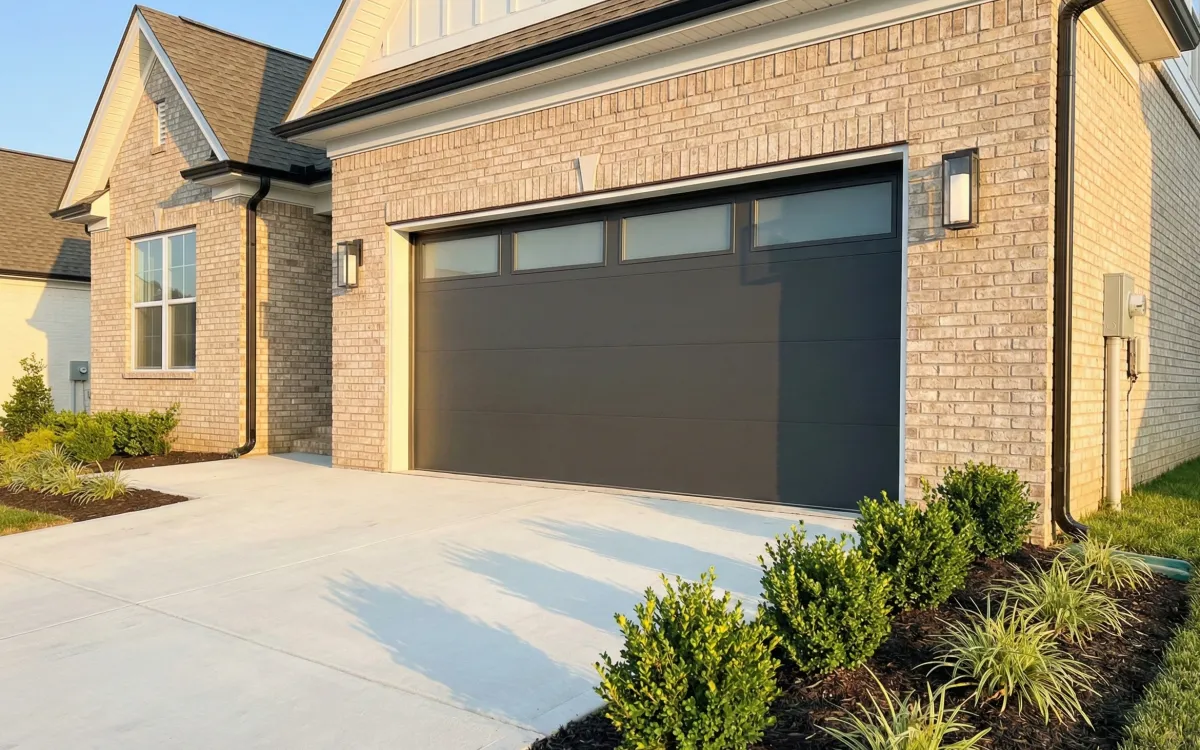
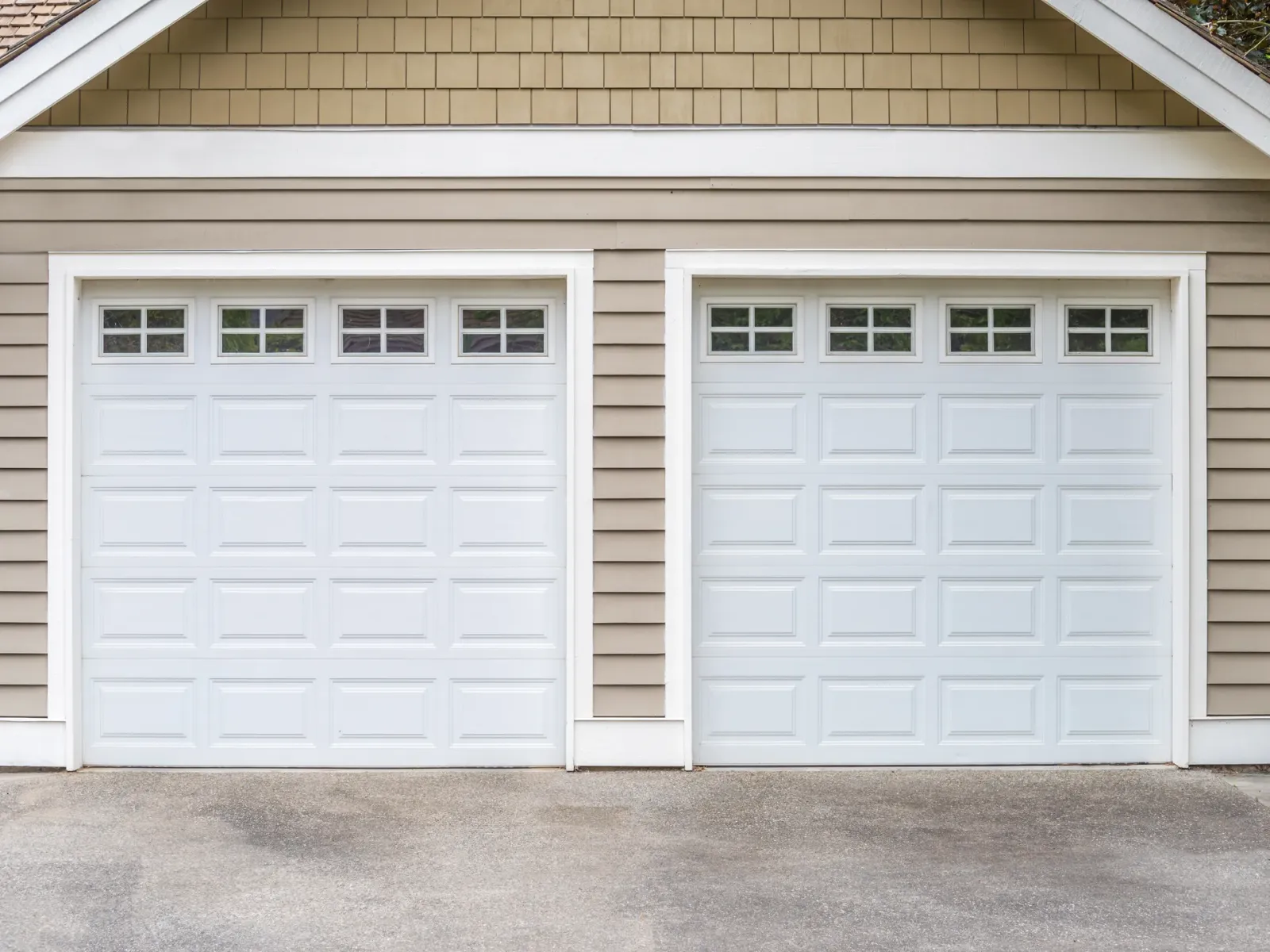
Traditional, carriage-house, and modern glass/aluminum-frame doors can all work—what matters is that the door matches the home’s architecture and trim details. If you want the visual-first breakdown, read: Choosing a Garage Door for Curb Appeal.
See examples on our Products page, and if you’re ready to install, start with New Garage Doors.
Step 3: Decide how important insulation is (in Tennessee)
Insulation matters most when:
- Your garage is attached to the house
- There’s a room above the garage
- You want less noise and “rattling”
Beyond energy comfort, insulated doors typically feel more solid and can reduce vibration and noise.
Related: How Energy-Efficient Garage Doors Help With Comfort
Step 4: Don’t ignore hardware (this is where quality shows)
Hardware upgrades can change how the door feels day-to-day:
- Higher-quality rollers and hinges can reduce noise and improve smoothness
- Proper spring sizing and balance protect your opener from strain
- Reinforcement can help doors stay stable over years of use
If your door currently feels heavy or “jumpy,” read: Garage Door Spring Replacement Guide
Step 5: Windows and glass—looks + privacy
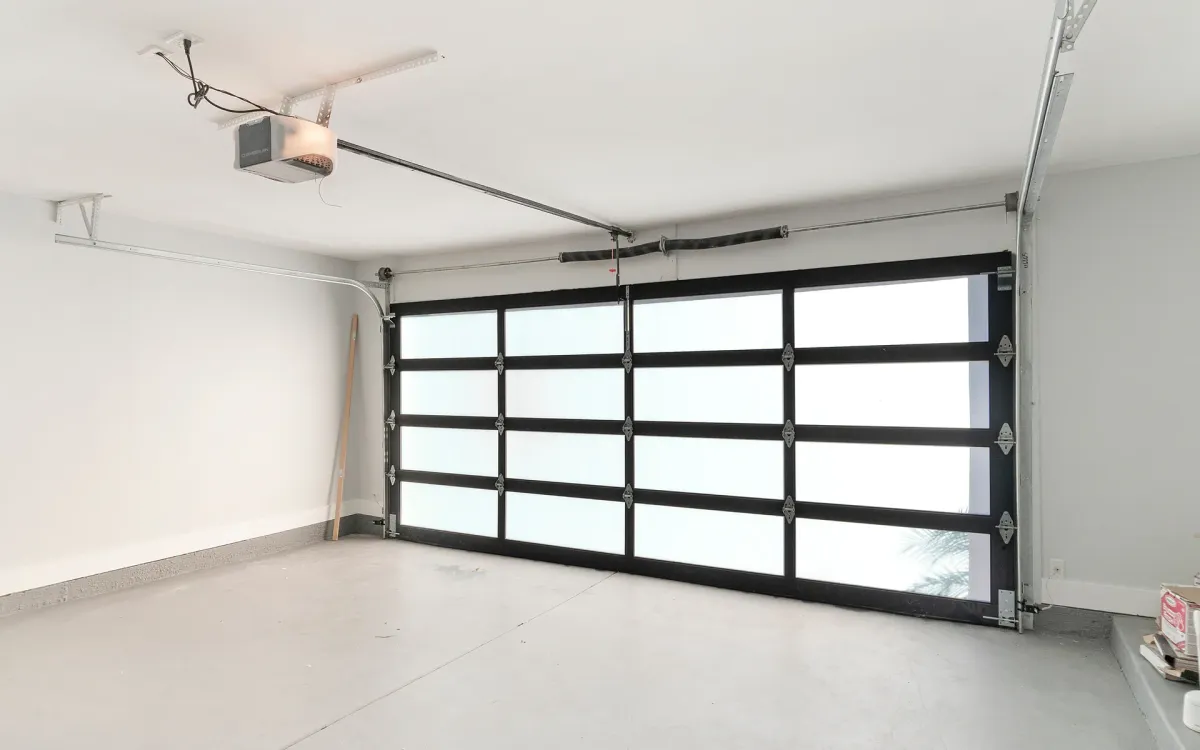
Windows can make a door look more upscale and brighten the garage. If privacy is a concern, consider frosted/obscure glass options and top-row placement. For a deeper visual breakdown, see: Choosing a Garage Door for Curb Appeal.
Step 6: Plan for opener compatibility
A new door is a good time to evaluate your opener:
- If your opener is struggling or noisy, the problem may be balance or worn components—not just the opener itself.
- If you want smart features, make sure the opener type and safety sensors are set up correctly.
Start here: Opener Repair & Install
Step 7: What to have ready for a fast, accurate quote
When you request an estimate, these details help:
- A few photos (inside and outside)
- Door width/height (if known)
- Any issues with the current door (noise, sticking, slow travel)
- Style preferences and whether you want insulation or windows
You can send photos and details through our Contact page.
Common mistakes to avoid
- Choosing a style that fights your home’s architecture (it looks “tacked on”)
- Over-focusing on the door face and ignoring hardware quality
- Ignoring sealing/weatherstripping (especially for attached garages)
- Pushing a struggling opener instead of addressing balance/spring issues
If you’re local: pick the right door for your city and layout
Home layouts and exposure differ across nearby communities, so the right mix of insulation, sealing, and style can vary. If you’re in the Cleveland/Chattanooga area, explore your area and then reach out:
Next step
If you want help comparing options, we can walk you through style, insulation, and setup choices and recommend what fits your home. Request Service for availability, or start with New Garage Doors to learn more.