Your garage door is often the largest entry point to your home, and for many homeowners, it’s also the most vulnerable. Whether your garage connects directly to living spaces or stores valuable tools and equipment, securing it properly is essential. Here are practical steps to strengthen your garage door security.
Upgrade to a Modern Opener with Security Features
If your opener is more than 10–15 years old, it likely lacks modern security features. Consider upgrading to a model with:
Rolling Code Technology
Rolling code (or Security+) openers generate a new access code each time you use the remote, preventing code grabbing. Older fixed-code systems can be intercepted with readily available devices.
Benefit: Makes it nearly impossible for thieves to copy your remote’s signal.
Smartphone Connectivity
Smart openers allow you to monitor and control your garage door from anywhere via smart controls.
Security advantages:
- Receive alerts when the door opens or closes
- Check door status remotely and close it if left open
- Grant temporary access to guests or service providers without sharing codes
- View activity logs to track when the door was used
Timer-to-Close Feature
Automatically closes the door after a set period if left open, preventing accidental openings.
Secure the Emergency Release
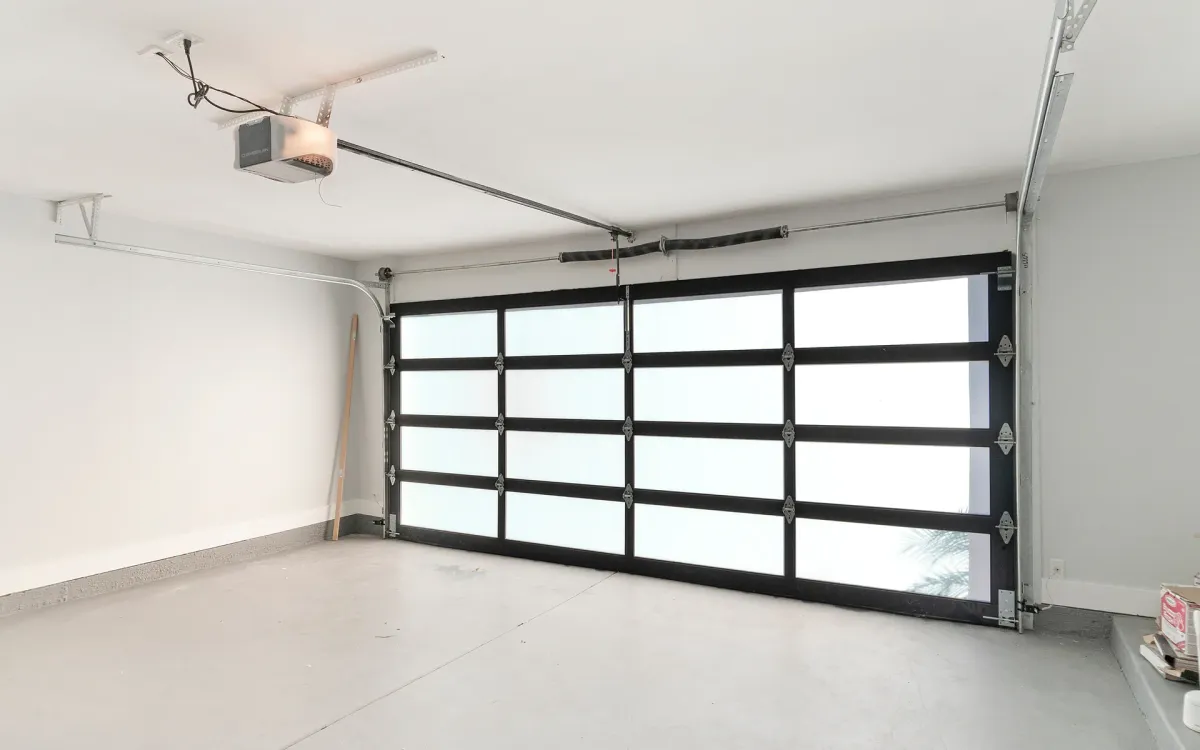
The emergency release handle (the red cord hanging from the opener trolley) allows manual operation during power outages, but it can be exploited by thieves.
The vulnerability: Burglars can use a coat hanger or similar tool through the top of the door to hook and pull the release handle, disengaging the opener and allowing the door to be lifted manually.
Solutions:
- Install a zip tie or shield over the release handle so it requires deliberate action to pull
- Use a vacation lock (a clamp that locks the trolley to the rail) when away for extended periods
- Ensure the door is locked with a manual deadbolt if you’ll be away
Add a Keypad Entry System
Keypad entry eliminates the need to keep remotes in vehicles, where they’re vulnerable to theft.
Best practices:
- Use a unique PIN that isn’t easily guessed (avoid birthdays or sequential numbers)
- Change the code periodically and whenever someone with access moves out
- Choose a keypad with a vacation mode or code lockout feature
- Position the keypad where it’s visible from the street to deter tampering
Install Motion-Activated Lighting
Well-lit areas deter burglars, who prefer to work in darkness.
Recommendations:
- Install motion-activated lights near the garage door
- Use lights with adjustable sensitivity to reduce false triggers
- Consider smart bulbs that can be controlled remotely or set on schedules
Secure Windows in Garage Doors
Windows provide natural light but can also provide visibility for thieves casing your home.
Options:
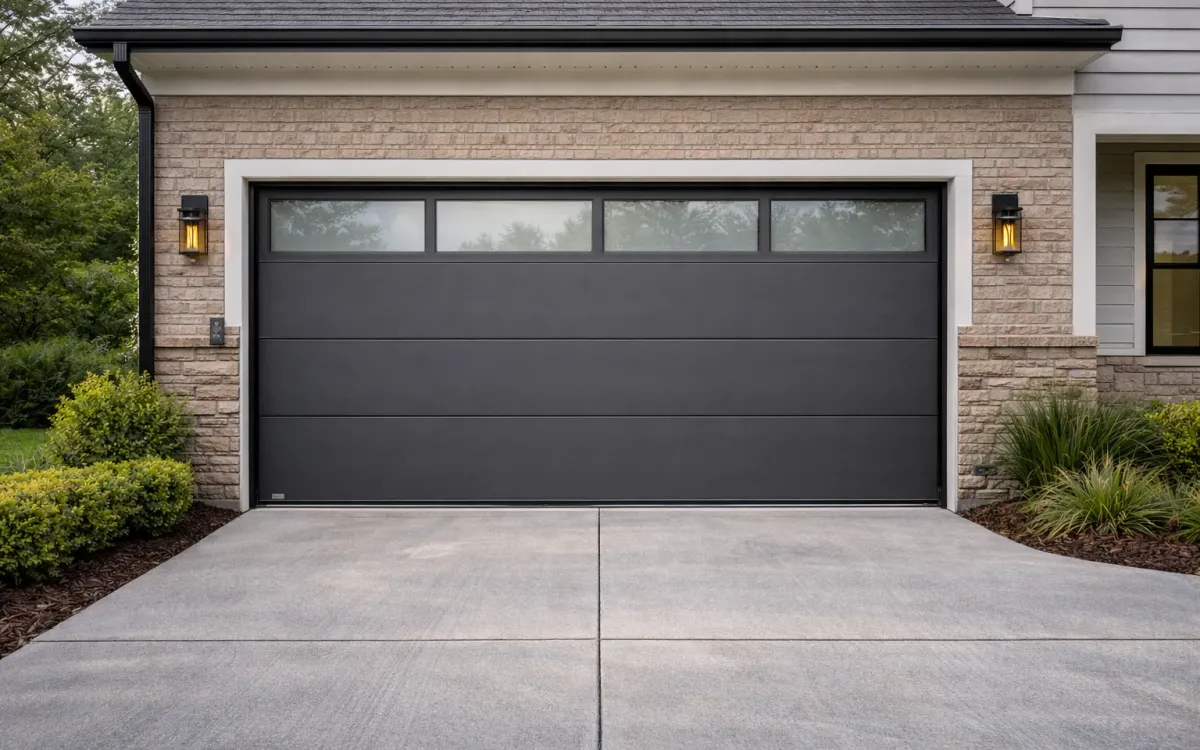
- Install frosted, tinted, or decorative window inserts to block visibility while maintaining light
- Add window security film to make glass more resistant to breaking
- Consider opaque window designs when choosing a new door
- Use curtains or blinds inside the garage
Lock the Door Between Garage and Home
If your garage connects to your home, the interior door should be as secure as your front door.
Best practices:
- Install a solid-core or metal door (not hollow core)
- Use a deadbolt lock, not just a keyed doorknob
- Keep the door locked even when home—don’t rely on the garage door as your only security layer
- Install a door viewer or peephole
- Consider a smart lock for remote access control
Don’t Leave Remotes in Vehicles
Remotes left clipped to sun visors or in center consoles are easily stolen during vehicle break-ins.
Alternatives:
- Keep remotes on your keychain
- Use smartphone control instead of remotes
- If you must leave a remote in the vehicle, use a locking glove box or hidden compartment
Cover or Disable Wall-Mounted Openers When Away
If you’ll be gone for extended periods:
- Unplug the opener or turn off the circuit breaker
- Engage the opener’s vacation mode (if available) to disable all remote and keypad access
- Use a manual slide lock or padlock through the track to physically secure the door
Inspect and Maintain Door Hardware
Worn or damaged hardware creates security vulnerabilities.
Check regularly:
- Lock mechanisms function smoothly
- Hinges and track brackets are tight and not damaged
- Bottom seal is intact (gaps allow visibility and access to release mechanisms)
- Door doesn’t have warped or damaged panels that could be pried
- Manual locks engage fully
Use Security Cameras
Visible security cameras act as deterrents and provide evidence if a break-in occurs.
Placement:
- Position cameras to cover the driveway, garage door, and approaches
- Ensure cameras have night vision capability
- Use cameras with motion detection and alerts
- Consider smart doorbell cameras that capture activity near entry points
Test Photo-Eye Sensors
Properly functioning sensors prevent the door from closing on objects or people, but they also ensure the door closes completely and doesn’t reverse unexpectedly.
Test:
- Wave an object through the sensor beam while closing—the door should reverse
- Ensure sensor lenses are clean and aligned
- Check that the sensors are mounted at the proper height (4–6 inches above the floor)
Consider a Garage Door Defender
A garage door defender is a heavy-duty lock that mounts to the floor and engages with the bottom of the door, providing physical security that can’t be bypassed by manipulating the opener.
Routine Maintenance Enhances Security
A well-maintained door is harder to breach and less likely to malfunction in ways that create security gaps.
Maintenance checklist:
- Lubricate locks and moving parts
- Tighten loose hardware
- Test auto-reverse functionality monthly
- Replace worn weatherstripping (prevents visibility into the garage)
- Inspect cables and springs for wear (a broken spring can leave the door stuck open)
Security Checklist
- Upgrade to an opener with rolling code technology
- Secure or shield the emergency release handle
- Install a keypad entry with a unique PIN
- Add motion-activated lighting
- Frost or cover windows
- Use a deadbolt on the door to your home
- Remove remotes from vehicles or secure them
- Enable vacation mode or unplug opener when traveling
- Install security cameras covering the garage
- Test photo-eye sensors monthly
- Keep door and hardware in good repair
Conclusion
Garage security doesn’t require expensive overhauls. Simple upgrades like rolling code openers, keypads, and secured emergency releases significantly reduce vulnerability. Combined with basic habits like keeping the interior door locked and not leaving remotes in vehicles, these measures provide strong protection for your home and belongings. For security upgrades, opener replacements, or professional installation, contact NK Garage Doors serving Cleveland, Chattanooga, and surrounding communities in Tennessee.